
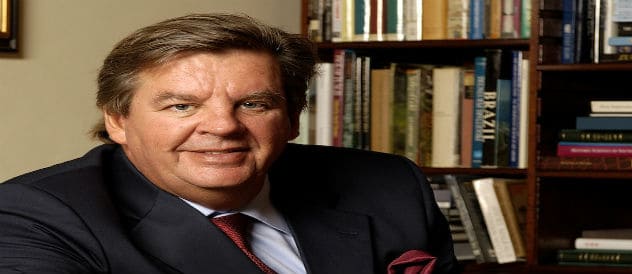
Cartier Owner Warns Fellow Super Rich They Can’t Take All The Spoils
[The following post is by TDV Editor-In-Chief, Jeff Berwick]
Many super rich individuals have spoken up about problems in the global economy. Johann Rupert, the owner of Cartier Jewelry and Chloe fashion worth approximately $7.5 billion (according to Bloomberg), is merely one of the many who have warned about the very same economic crises we here at TDV write about daily.
“We cannot have 0.1 percent of 0.1 percent taking all the spoils,” said Rupert. “It’s unfair and it is not sustainable.”
This is in particularly true when the reason why this small clique of individuals accrues wealth is thanks to cronyism with government.
He believes that advances in technology will lead to mass unemployment. According to Rupert, selling luxury goods will even become a problem as the rich will wish to conceal their wealth.
“How is society going to cope with structural unemployment and the envy, hatred and the social warfare?” he asked. “We are destroying the middle classes at this stage and it will affect us. It’s unfair. So that’s what keeps me awake at night.”
As I have stated time-and-time again, there will be a massive changes in industrial societies, starting first and foremost with an economic crisis much bigger than 2008. Rupert agrees.
“We’re in for a huge change in society,” he said Monday. “Get used to it. And be prepared.”
This echoes the sentiments I dedicate my time towards here at TDV.
When Rupert says, “We cannot have 0.1 percent of 0.1 percent taking all the spoils,” he is likely talking about his fellow super rich.
These top 25 banks and corporations are at the heart of the super rich:
1. Barclays plc
2. Capital Group Companies Inc
3. FMR Corporation
4. AXA
5. State Street Corporation
6. JP Morgan Chase & Co
7. Legal & General Group plc
8. Vanguard Group Inc
9. UBS AG
10. Merrill Lynch & Co Inc
11. Wellington Management Co LLP
12. Deutsche Bank AG
13. Franklin Resources Inc
14. Credit Suisse Group
15. Walton Enterprises LLC
16. Bank of New York Mellon Corp
17. Natixis
18. Goldman Sachs Group Inc
19. T Rowe Price Group Inc
20. Legg Mason Inc
21. Morgan Stanley
22. Mitsubishi UFJ Financial Group Inc
23. Northern Trust Corporation
24. Société Générale
25. Bank of America Corporation
Georgetown University history professor Carroll Quigley once wrote…
[T]he powers of financial capitalism had another far-reaching aim, nothing less than to create a world system of financial control in private hands able to dominate the political system of each country and the economy of the world as a whole. This system was to be controlled in a feudalist fashion by the central banks of the world acting in concert, by secret agreements arrived at in frequent private meetings and conferences. The apex of the system was to be the Bank for International Settlements in Basle, Switzerland, a private bank owned and controlled by the world’s central banks which were themselves private corporations.
Thankfully, Rupert is right – technology will lead to mass unemployment. But this mass unemployment, thanks to breakthroughs like Bitcoin and others, will also take place in the high financial and government sectors.
The blockchain is making The-Powers-That-Be irrelevant, and this trend is certain to continue. If I had any advice for Rupert, it would be diversify his portfolio into block chain related assets – Bitcoin first. For those who learn skills that can help Bitcoin, and, as well, those who have some Internet savvy, could very well position themselves to prosper among the coming changes.
For our paid members, The TDV Newsletter has served as an actionable guide for surviving The End Of The Monetary System As We Know It (TEOTMSAWKI). We've covered gold products, including bullion, stocks and luxury goods, as well as Bitcoin starting in 2011 when it was worth a few dollars. Click here to learn more.
