
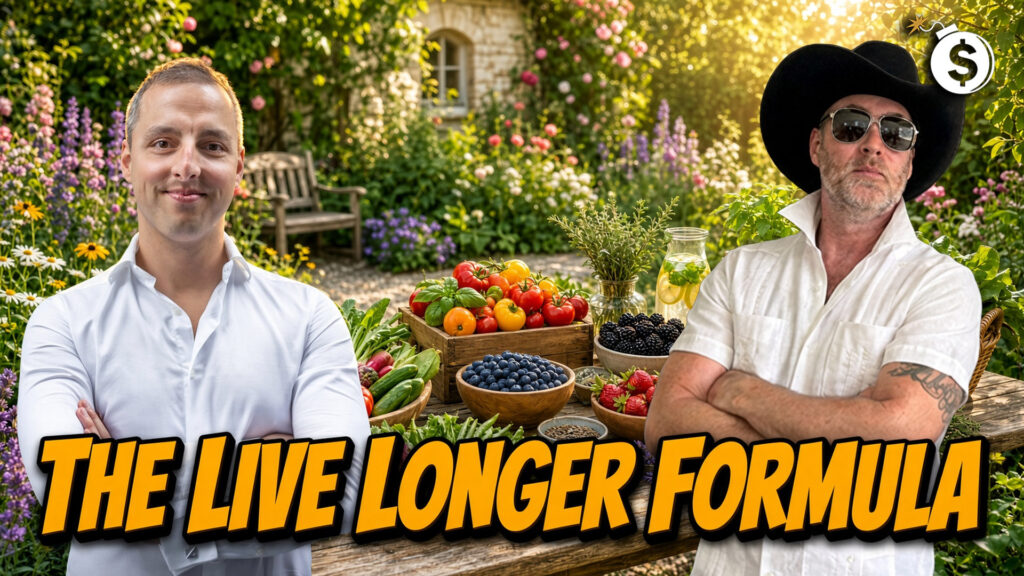
The Fasting Delusion and the Metabolic Trap: Jeff Berwick With Christian Yordanov
I’ve tried just about every diet on earth on my quest to discover the best way to live. I was vegetarian for five years, vegan for two (though I was the worst vegan ever, mostly surviving on spaghetti with margarine and potato chips), and then I swung hard the other way into the Atkins diet, dropping down to near 0% body fat. For years, I also swore by intermittent fasting until I heard some information that long term intermittent fasting has its own problems. It had become such an ingrained habit that forcing myself to eat before noon was a struggle!
But like many people in our community, I’ve started questioning whether some of these health trends are actually doing us long-term favors. That’s why I’m talking to functional diagnostic nutrition practitioner Christian Yordanov today.
Christian has a new book out called The Fasting Delusion (following his earlier book, How to Actually Live Longer), and his science-backed research goes directly against conventional health dogma. Get ready to get triggered, because what he has to say turns a lot of sacred cows upside down… like, why Omega 3s are probably one of the biggest scams in the supplement industry. A $10 billion-a-year scam.
When Christian told Dave Weiss he was writing a book on fasting, Dave joked, “You’d have an easier time convincing people the earth is flat than convincing them fasting is bad for them.”
It’s true… people love their fasting. But in our chat today, Christian lays out a stark three-part thesis on why fasting is heavily overrated:
- It's a terrible long-term health and longevity strategy.
- It's a terrible strategy for long-term weight loss.
- It's a terrible strategy for addressing chronic health problems (like gut dysfunction, autoimmune disease, diabetes, heart disease, and even cancer) despite any short-term benefits.
We’ve all heard the party line from the algorithms: Fast, burn fat, make ketones, and heal your body through the magic of autophagy.
In reality, when you fast, the first 24 hours are rough. As your liver glycogen depletes, your body panics to keep your blood sugar from dropping low enough to put you into a coma. Your cortisol and adrenaline spike, and your body enters a stress response where it literally starts degenerating its own lean tissues (muscle, bone collagen, joints, skin, and organs) to manufacture glucose through gluconeogenesis.
That “high” or surge of energy people feel around day three? Christian sayss that isn't magic healing; it's high-octane survival stress hormones masking a slow metabolic breakdown. Furthermore, longer fasts unleash stored omega-6 polyunsaturated fats (seed oils) and lipophilic environmental toxins (persistent organic pollutants) that your body had safely sequestered away in fat tissue.
Low-carb diets, keto, and constant intermittent fasting put a massive baseline of stress on the body.
Christian pointed out a wild statistic: even children with epilepsy put on a strict keto diet frequently get diagnosed with hypothyroidism within months. If a resilient child's metabolism can take a hit that fast, think about an adult dealing with decades of stress, nutrient deficiencies, and toxin accumulation.
When you run on cortisol and adrenaline constantly, your metabolism slows down. Over time, you burn fewer calories day-to-day, making you more prone to gaining weight the second you eat a normal meal or go on vacation. It’s a vicious cycle that forces people to fast harder, exercise more strenuously, and trap themselves in what Christian calls a metabolic corner.
So, what should you actually eat? If you're like me (a 55-year-old guy who has found that I don’t love my low carb diet) the good news is you don’t have to starve yourself or live on zero carbs.
Christian’s baseline approach to cleaning up your diet is refreshingly simple:
- Cut out the “Survival Foods”: Remove grains (except white rice, which is polished and well-tolerated), beans, legumes, nuts, and seeds. Seeds and nuts are where inflammatory seed oils come from, and grains/legumes are largely low-nutrient filler foods.
- Prioritize High-Quality Protein: Load up on great, healthy meat (like steak). Don't force your body to waste precious, expensive protein by converting it into glucose when clean carbs can do the job much cheaper and more efficiently.
- Embrace Clean Carbs: Incorporate potatoes, white rice, whole fruits, fruit juices, and natural sweeteners like honey and maple syrup. If you're active and coming off a low-carb diet, aiming for a clean baseline of 200 to 300 grams of clean carbs daily can completely revitalize your metabolism.
I’ve started implementing some of these shifts, and I've noticed some positive improvements. You don't have to punish your body with endless fasting or restrictive low-carb dogma to be healthy.
Want to dive deeper into this? Christian Yordanov is speaking this weekend at Anarchapulco Vital and Awake (happening October 17–18). Check it out at anarchapulco.com to learn more about breaking free from the health algorithms and fixing your metabolism for the long haul!

Watch on:
Vigilante.tv | Odysee | Rumble | Bitchute | Brighteon | Telegram | X/Twitter | Instagram
Podcast: Play in new window | Download
Subscribe to the TDV podcast: Amazon Music | RSS | More
